
Ormiston Families: Impact Case Study
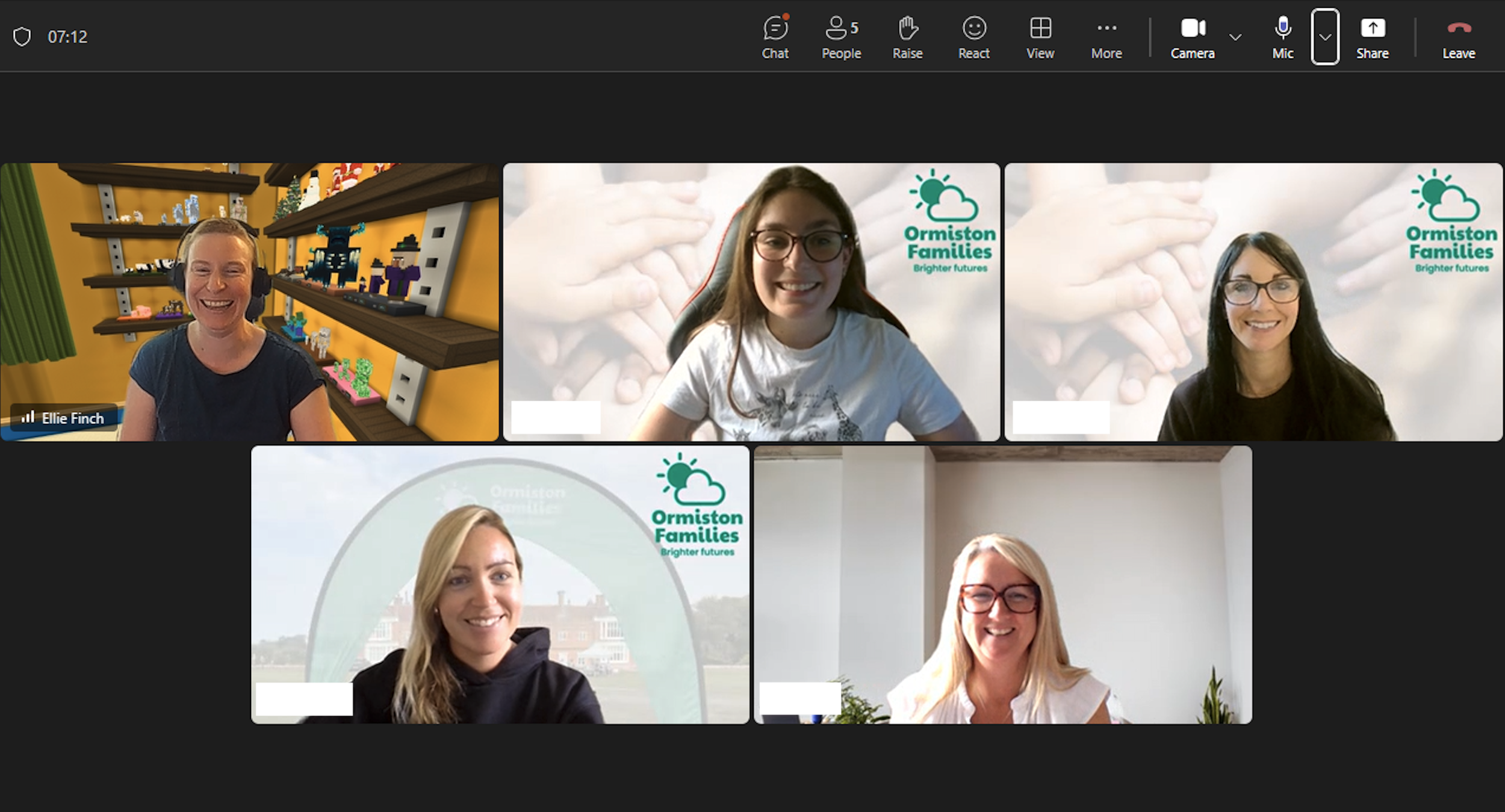
The Ormiston Families team during one of their consultations with Ellie
Supporting Children Affected by Parental Imprisonment Across the East of England
Ormiston Families is a charity based in the East of England, working in three areas: mental health and wellbeing, families affected by offending, and parental support. Their Breaking Barriers service supports children who have experienced the imprisonment of a parent or close family member.
Dispersed across four counties, the team had been looking for a way to reach more children without losing the integrity of their service - particularly those who were unable to access or would not engage with face-to-face support. Existing online options did not feel like the right fit, until Breaking Barriers Regional Manager Tina Hart came across Ellie's work on YouTube.
"I could see how she was using Minecraft as a therapeutic tool. This led me to her website where I was able to learn more - testimonials from other services, the research with Cambridge University, articles written about the benefits and impact of the model. I knew this is what I wanted for our online model, my team, but especially the children we support."
In October and November 2025, all six members of the Breaking Barriers team completed both Level 1 and Level 2 of the Using Minecraft as a Therapeutic Tool training programme. None of them had played Minecraft before.
Going on the Journey Together
From the start, Tina was clear that this needed to be a shared endeavour. The whole team trained together, and following the training, six monthly one-hour consultation sessions were arranged with Ellie, moving to quarterly thereafter.
Those consultation sessions have been used to build something bespoke. With Ellie's support, the team created a Minecraft world designed specifically for the Breaking Barriers service - one that translates the tools they use in face-to-face work into the game environment. The aim was to deliver a focused intervention that supports children in exploring and processing their feelings, reducing isolation, asking questions, and getting what they need - all within a space that also allows for creativity and enjoyment.
A six-month pilot began following training, offering sessions using Minecraft as an additional option within the existing service for children and young people aged 10 to 19. Sessions are delivered remotely, one-to-one, during school hours, with schools providing access in a safe environment. The remote delivery model has also made it possible to reach children and young people who are educated outside of school or no longer on a school roll, with sessions provided to them at home - highlighting how accessible the service can be when Minecraft is used as the therapeutic tool.
"Apart from a few technical challenges, this has worked well," Tina reflected. "Schools have been supportive of this new model, which has been encouraging for us and for the children."
What Children and Families Have Said
The response from children accessing the service has been positive. One young person described what worked for them: "All of it. I liked being able to communicate online with you as this felt comfortable for me, and I am very good at Minecraft. So it just worked."
Parents and carers have also welcomed the approach. Some had been worried their child would not engage with support - and came to feel that sessions using Minecraft would work better for them.
The feedback from schools has been similarly encouraging. One teacher had said of a child before the sessions began: "He does not communicate easily, he may not engage." The same teacher later shared: "I was in the next room. I could not hear what he was saying, but it was so pleasing to hear him talking and engaging with you."
Building Confidence Across the Team
As well as the impact on children, the training and ongoing consultation have made a difference to how the team feels about their practice. To sustain and grow their skills, the team meets fortnightly to practise in Minecraft, explore new tools added through the consultation sessions, and share what is going well and what has been more challenging.
Grace Seeley, Team Leader for Breaking Barriers in Suffolk and Norfolk, reflected on the experience:
"Using Minecraft as a therapeutic tool has been eye opening. I have been able to meet children and young people through a medium they feel comfortable accessing. Children and young people have been able to use their creative flair and lead our interventions with ease, whilst being able to focus on the goals we have set and continued to work towards. The feedback from children has been very positive and highlights how impactful using Minecraft as a tool has been able to create change within their lives."
The pilot runs until the end of July 2026, at which point the team will evaluate with a view to further developing and embedding Minecraft as a therapeutic tool within the Breaking Barriers service.
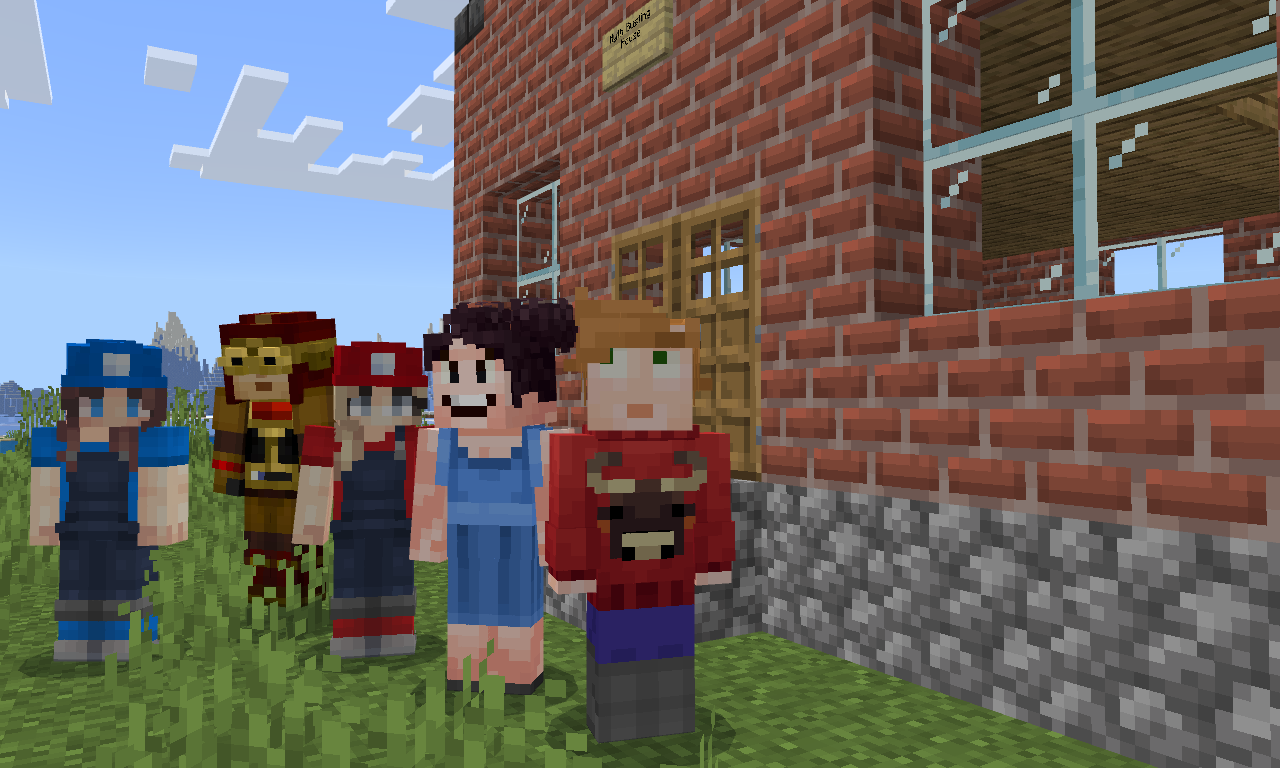
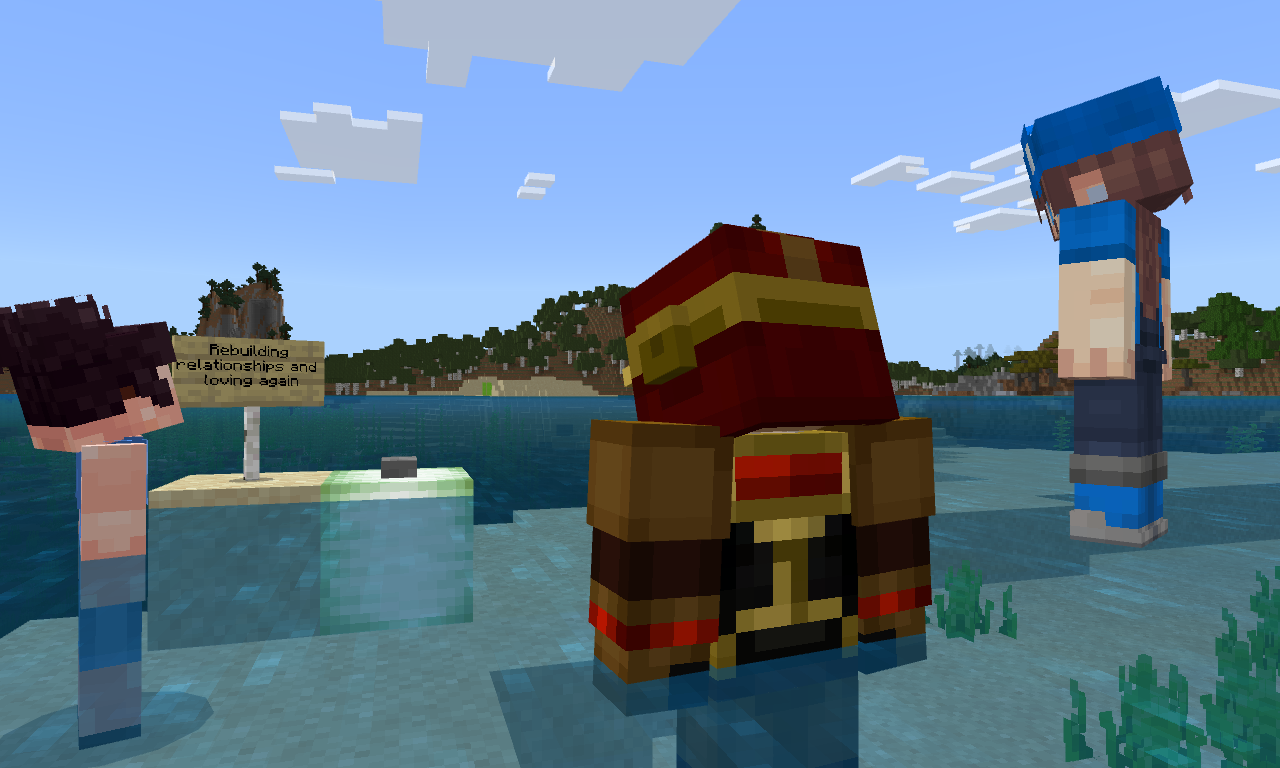
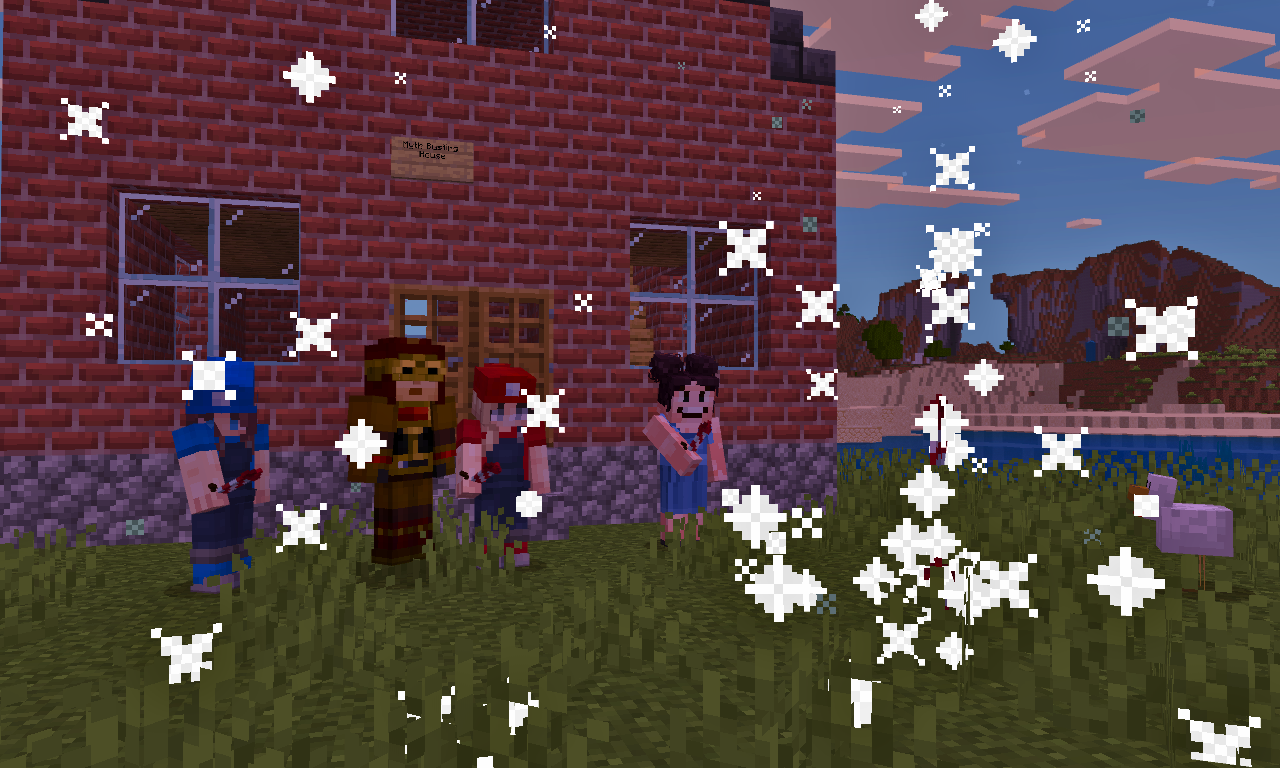
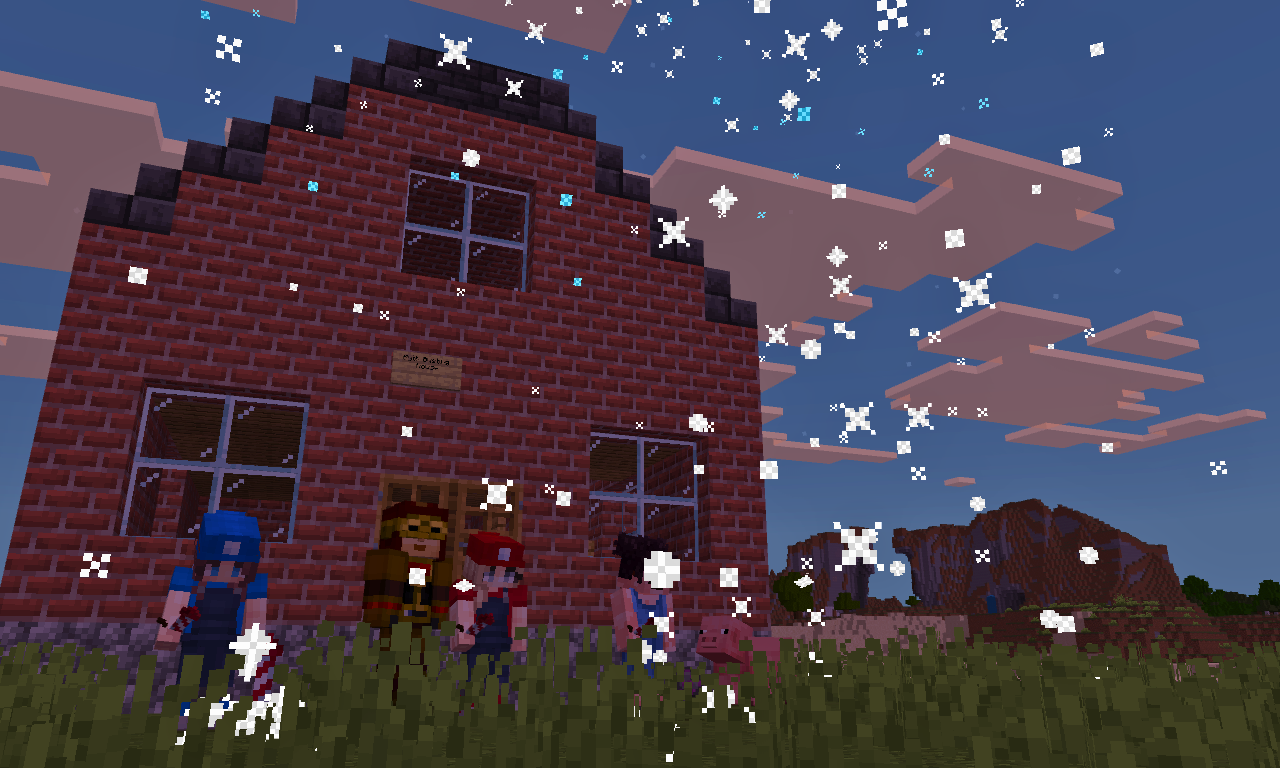
The Ormiston Families team in Minecraft with Ellie during one of their consultations. Images source: Minecraft
