
Building Together: Bringing My Work with Families in Minecraft to Gaming the Mind 2026
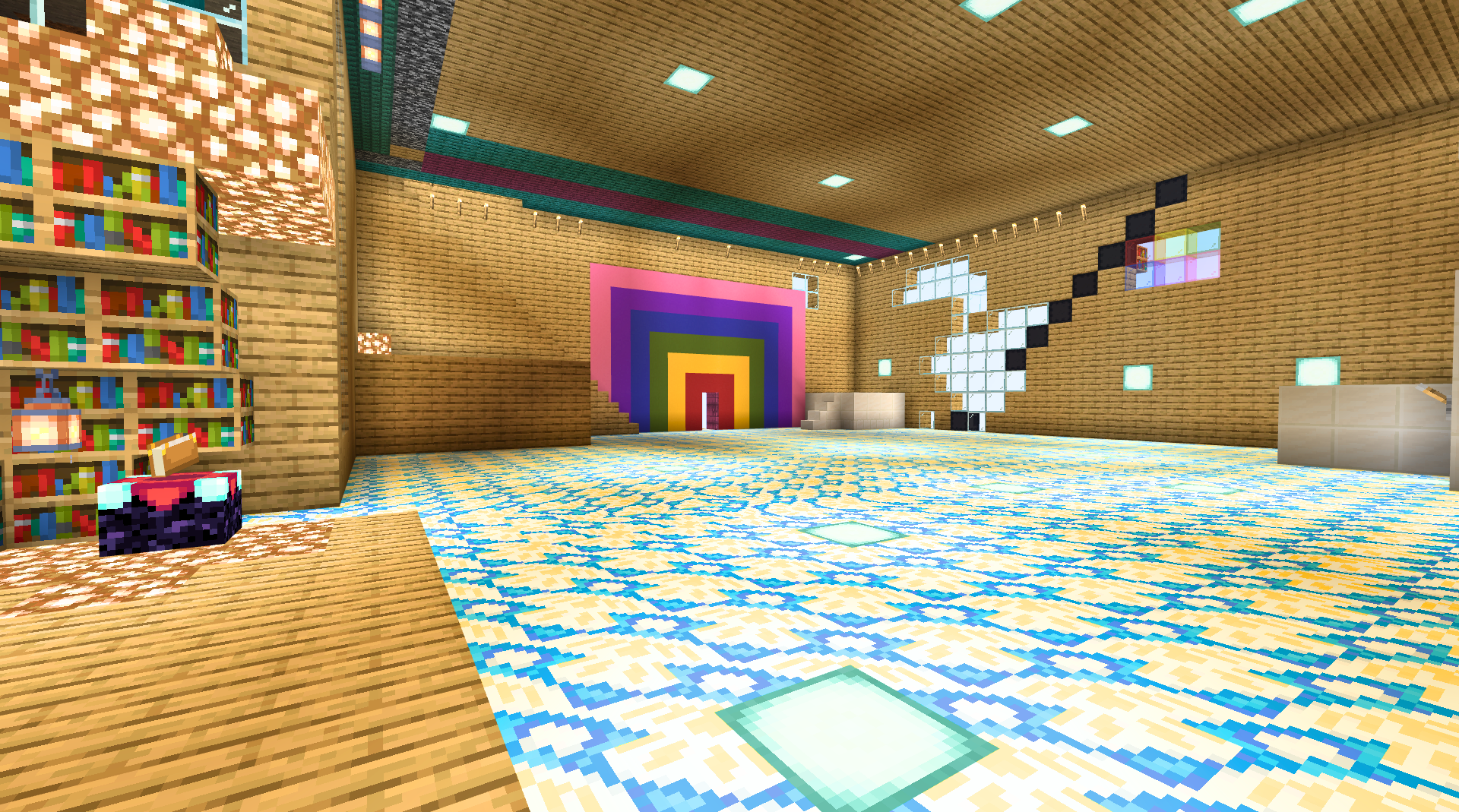
The Stevenson family’s safe place after repair, including a rainbow feature wall and windows used to fill the cracks left by the damage.
In a couple of weeks I'll be at the Gaming the Mind Conference at the Royal College of Psychiatrists in London, bringing a poster about my systemic therapy work with families in Minecraft.
The poster draws on an article my clinical supervisor Mark Rivett and I published this year in the Journal of Family Therapy, 'Systemic Therapy Through a Pixelated Lens'. It follows two families, each including an autistic child and/or a child with ADHD, who took part in ten online family counselling sessions with me inside Minecraft.
Together, Mark and I adapted familiar systemic techniques for use in Minecraft. Families built a shared safe place, made totems to show how they saw each other, and created representations of anxiety so it became something the whole family could look at and face together, rather than something belonging to one child. When one family's safe place was flooded with lava, they decided together how to rebuild it, filling the cracks with a rainbow wall and windows.
The children were often the ones leading, teaching their parents how to play and showing them around what they'd made. One parent said working in Minecraft "levelled the power dynamic - or actually reversed it". Having something to look at together also made it easier to talk about things like anxiety, or how close or distant family members felt. One of the children said it "felt like fun rather than therapy".
I'm very grateful to both families for their generosity in letting us write about their sessions and share images from their work with the wider therapeutic community. Everything has been anonymised and checked with the families.
I'm also looking forward to the wider programme, which brings together clinicians, researchers and game developers. I'm particularly keen to hear from Professor Paul Fletcher at the University of Cambridge, who collaborated on the game Hellblade, as well as Cyrus Nemati of Little Bat Games, the makers of Vampire Therapist, and Dr Laura Helsby on games and low mood.
If you're going, in person or online, do say hello. My poster will be up in the main hall on the day, and I'd love to talk with anyone interested in how videogames can make therapeutic support more accessible and engaging for children and families.
You can access the full article and see more images from the families' sessions on the PlayMode Academy blog here.
Gaming the Mind Conference 2026
Monday 2 November, 9:30 to 17:00
Royal College of Psychiatrists, London, and online
